

5% OFF WITH THE WELCOME CODE

ALL THE WHITE WINES

Both white berries and black grapes can be used to produce white wines. This is possible because white wine making uses a must obtained only from the acorn pulp with the exception of the skins which are the ones that give color to the wine. In recent years, some producers prefer to take a short maceration on the skins in order to allow the extraction of those substances that will feature white wine. An important time for the production of white wines is the vintage that will have to be made according to the type of wine that you want to produce. For grapes used for the production of sparkling wines, harvesting will be anticipated in order to have a fair degree of acidity, whereas for important white wines it will be important to harvest ripe grapes. Grapes harvested in the cellar will first be dirasped and then pressed, so as to facilitate the leakage of the liquid part. The pressing operation is particularly important in white wines because the skins will have to yield color to the must. Before fermentation, operations can be carried out to allow the transfer of varietal characters from skins to musts. It will be said then of criomaceration, which is a technique for cooling at 5 ° for about 20 hours of whole grapes or must in small containers in order to extract the aromatic compounds of skins well.Another technique is that of film maceration which consists in keeping the must in contact with the skins for 12/20 hours at a temperature of 10 ° to have white wines with a superior olfactory heritage and more intense colors. All cases However, it is necessary to pass quickly to the pressing step which allows to extract the juice from the grape press to be sent to the fermentation in the absence of the skins. The so obtained must be subjected to defecation or scattering, which is the operation that eliminates any residual fragments of skins, scraps, cellulose residues and earthy materials that could compromise the quality of the future wine. The so-cleaned must will be started at fermentation with the addition of yeasts. The fermentation can be conducted in a steel tub, barrique, concrete tanks, amphora according to the type of wine you want to produce. After fermentation, the wine is separated from its lees, consisting of dead yeasts and protein flocculants depositing on the bottom of the tub. For the production of large white wines suitable for aging, some producers prefer wine contact with these fine lees for a variable time (so called sur lies) to enrich it with aromatic precursors. Depending on the freshness and the degree of softness desired by the wine, the producers choose to make malolactic fermentation. After the stoppage is completed, the wine passes into the refining containers that can be of steel, wood, cement, amphora, etc. If you choose steel you will get a wine where the aromatic specificity of the grape will be safeguarded and the product it will look fresh and young. Instead, wood will be used if we want an important wine and aging, bearing in mind that wood will affect the taste of wine. Before bottling, the white wine is filtered even if some manufacturers prefer not to filter it so that they do not remove scents and aromatic substances.

SKU: NAB001

Toco Poco by Nika Bakhia is an enveloping macerated white wine with good intensity. Fresh and gritty, it moves in the mouth revealing its warmer, denser and more intense side. Fruit, spices and depth in a single sip for a very persistent finish. Whole bunch maceration and spontaneous fermentation in kvevri. Aging in the same containers.

Region: Georgia.

Grapes: Rkatsiteli

Alcohol content: 14%.

Aging: Macerated for 6 months on the skins in amphorae.

Contains sulfites

€34.90
Add to cart
SKU: MOT008

"Uis Blanc Dodon" by Denis Montanar is an intense and structured macerated white wine that comes from a blend of Friulano, Sauvignon and small quantities of Pinot Bianco and Verduzzo. The color is golden yellow in color with orange nuances. On the nose it expresses itself on aromas of dried fruit, citrus fruit peel, and honeyed notes. On the palate it is complex, fresh, with light tannins and very long. 

Region: Friuli Venezia Giulia.

Grape variety: Friulano, Sauvignon and small quantities of Pinot Bianco and Verduzzo.

Alcohol content: 14%.

Aging: 12 months in 30 hl oak barrels and  8 months in cement vats.

Contains sulfites
€32.90
Add to cart
SKU: PAR002

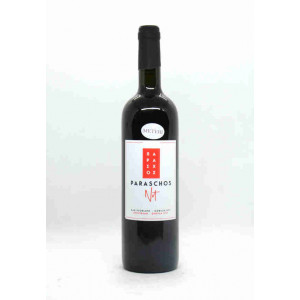
The Not di Paraschos is a macerated white wine made from 100% Pinot Grigio grapes from the Slatnik vineyard located on marly-clayey soil. On the nose sensations of candied and dried fruit with honeyed notes. In the mouth it is structured, dry, warm with a pleasant freshness and light tannins. Good persistence with a return of the candied fruit.

Region: Friuli Venezia Giulia.

Grapes: Pinot gris.

Alcohol content: 14%.

Aging: 24 months in Slavonian oak barrels.

€45.90
Add to cart
Compare (0 items) My Wishlist (0 items) Contact us
Please login first
Please login first

Your cart

There are no more items in your cart